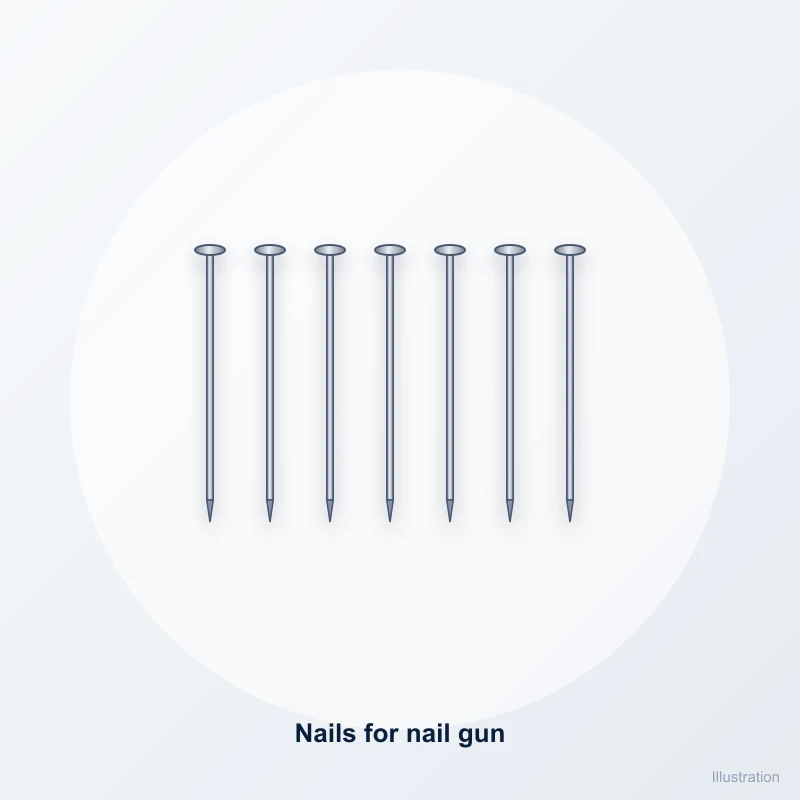
Gun Nails (DN27)
Code: DN27 (meaning to be confirmed) | Likely length: about 27 mm (to confirm) | Form: loose or collated strip (to confirm) | Used with: nail gun | Supply: boxed, quantity to confirm
Nails for gun, listed as DN27, are made to be fired from a nail gun for fast repeat fixing. The code has not been matched to a datasheet yet, so confirm length and gun fit with our team.
Key Features
Applications

Gun nails are nails made to be fired from a nail gun instead of hit with a hammer. They come loose or in collated strips, and the gun decides which nail fits. Falcon Link TR supplies gun nails listed as DN27 from Sharjah, for fast repeat fixing in UAE fit-out and carpentry work.
What are gun nails and what does DN27 mean?
A nail gun fires a nail using gas, compressed air or a battery drive. The nail must match the gun in length, shank and, for strip guns, the way the nails are collated. That is why buyers ask for "nails for gun" and then give a code.
DN27 is the code in our product list. We have not matched it to a datasheet, so its meaning is not confirmed. The two readings buyers commonly make are a nail of about 27 mm length, or a series code that belongs to one gun maker. Treat both as unconfirmed. Please send us your gun model or a sample nail and we will confirm what DN27 fits.
Gun nail types: how the range is organised
| Type of gun | Nail form | Usual base | Typical job | What to confirm |
|---|---|---|---|---|
| Gas-actuated fixing gun | Short hardened nail with a collar or fins, often in a strip | Concrete, block, steel (depends on the gun) | Track, battens, light brackets | Nail length, collar type, strip or loose, gun model |
| Pneumatic framing or finishing gun | Straight or angled collated strip | Timber, plywood, board | Carpentry, formwork panels, joinery | Strip angle, nail diameter, head type, gun model |
| Electric or battery brad gun | Thin nail or pin | Timber, MDF | Trim, skirting, beading | Gauge, length, head type |
| DN27 (our listed code) | To be confirmed | To be confirmed | To be confirmed | Everything above: send the gun model |
The wide difference between these guns is why one nail cannot be assumed to fit every gun. Even guns from the same maker can use different strip angles.
Drive pin vs gun nail vs wire nail vs masonry nail
| Name | Fired or hit | What it fixes | When to pick it |
|---|---|---|---|
| Drive pin with washer | Fired by a cartridge tool | Track and channel into concrete or steel | Hard base, thin material to hold. See drive pin with red washer |
| Gun nail | Fired by a nail gun | Wood to wood, or light fixing to a base the gun can handle | Many identical fixings, speed matters |
| Wire nail | Hit with a hammer | Wood, plywood | General carpentry and shuttering. See black steel nails and nail washers |
| Masonry nail | Hit with a hammer | Light fixing to block or soft concrete | Small jobs without a plug |
Short version: a nail gun nail is not the same as a drive pin. Pins go with powder-actuated tools. Gun nails go with nail guns.
Why use gun nails instead of hand nailing?
- Speed on repeat work. A strip of nails lets one operator fix a long run of panels or battens quickly.
- Even fixing. Each nail goes in to the same depth when the gun is set correctly, which helps panels stay flat.
- Less splitting. A gun-driven thin nail can split timber less than a heavy hand blow.
- Less fatigue. Useful in large fit-out or shuttering jobs with thousands of fixings.
Where gun nails are used
| Application | How gun nails help |
|---|---|
| Plywood and shuttering panels | Fast fixing of sheets to timber frames |
| Timber battens and frames | Quick, repeat nailing of straight members |
| Fit-out joinery and trim | Thin nails leave small marks on skirting and beading |
| Pallet and crate making | High-volume nailing of boards |
| Light track to concrete | Only with a gun and nail made for concrete. Ask us first |
How do you choose the right gun nail?
- Start from the gun. Read the model and the nail size printed on it or in the manual.
- Pick the nail length so it passes through the top layer and enters the base well. For wood, many carpenters use a nail about two and a half to three times the thickness of the piece being fixed.
- Match the strip type: paper, plastic or wire collated, and the strip angle.
- Choose a finish for the place of use. Bright steel is fine in dry indoor work. Humid or outdoor jobs need a coated or galvanised nail.
The most common mistake is buying by length only. A nail that is the right length but the wrong strip angle will jam the gun. Send us a sample strip or the gun model with your quote request.
UAE conditions to plan for
Heat expands the gas in some fuel cells and softens plastic collation, so store strips and cells in the shade. Humid air rusts bright steel nails fast. In coastal sites or wet areas, ask about coated nails, and avoid putting plain steel into damp timber that will show stains.
What to buy together with gun nails
Gun nails are rarely bought alone. Add wire nails and nail washers for hand work, drive pins for concrete track, and wall plugs where nailing will not hold. See the full fasteners and fixings range.
How to request a quote
Tell us the gun make and model, the nail length you use now, the base material, the quantity and your delivery area on the contact page. A sample strip speeds up matching.
Use Cases
Shuttering panels
A gun speeds up fixing plywood sheets to timber studs when the same pattern repeats across many panels.
Fit-out carpentry
Thin gun nails fix framing and trim quickly and leave small marks that are easy to fill.
Pallet and box making
High-volume nailing of boards is where a strip of gun nails saves the most labour.
Batten runs
Straight timber battens for lining or cladding go up faster with a gun than by hand.
Frequently Asked Questions
What does DN27 mean?
DN27 is the code in our product list and its meaning has not been confirmed against a datasheet. It may refer to a nail of about 27 mm or to a gun maker series code. Send us your gun model or a sample nail and we will confirm the match.
What nails go in a nail gun?
It depends on the gun. Framing and finishing guns take collated strips with a set angle and diameter. Gas fixing guns take short hardened nails with a collar. The nail must match the gun maker listing, so check the model before ordering.
What is the difference between a drive pin and a gun nail?
A drive pin is fired by a cartridge tool into concrete or steel and carries a washer. A gun nail is fired by a nail gun, mostly into timber or board. They are not interchangeable between tools, so always match the nail or pin to the tool.
Are gun nails compatible between brands?
Not always. Nails can differ in strip angle, collation type, head shape and diameter even at the same length. Some guns accept a range, others one type only. Give us the gun model or a sample strip and we will confirm what fits before you buy.
What nail length should I use for timber?
A common trade rule is a nail about two and a half to three times the thickness of the piece being fixed, so the point goes well into the base. Check the gun maximum length and the strip size. Confirm exact size with our sales team.
Can I use gun nails in humid UAE conditions?
Bright steel nails rust quickly in damp or coastal air. For humid, wet or outdoor jobs, ask us about coated or galvanised nails. For dry indoor fit-out, standard nails are usually adequate, but check with your engineer or supervisor.
More from Fasteners, Anchors & Fixings
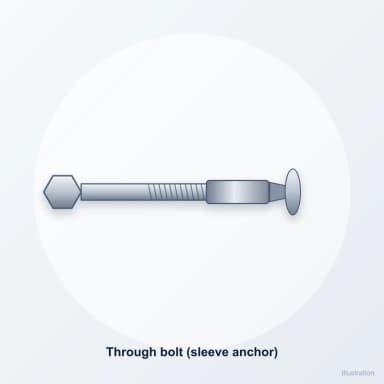
Through Bolt (Wedge / Sleeve Anchor)
Type: through bolt (wedge or sleeve anchor) | Typical sizes: M8, M10, M12, M16 | Common lengths: 75 to 200 mm | Finish: galvanised or stainless | Base: concrete

Black Steel Nails & Nail Washers
Type: black steel wire nail, flat head | Length: about 1 to 6 inch (25 to 150 mm) | Finish: black, bright or galvanised (to confirm) | Also: nail washers | Supply: by kg or carton (to confirm)
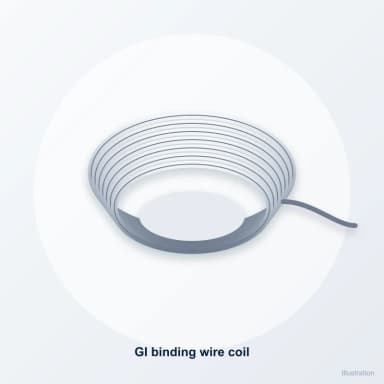
GI Wire (Galvanised Binding Wire)
Material: galvanised iron wire | Common gauges: SWG 16, 18, 20 | Supply: coils (weight varies) | Uses: rebar tying, fencing, hanging, general binding
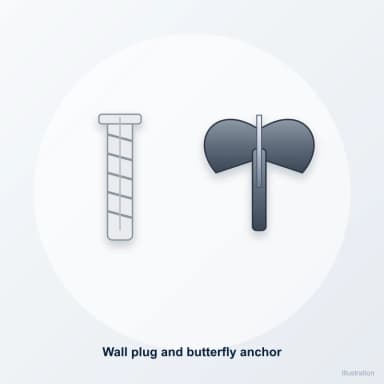
Fischer Plug & Butterfly Fischer (Wall Plugs)
Type: plastic expansion wall plug and butterfly (toggle) plug | Common plug sizes: S5, S6, S8, S10, S12 | Drill size: matches plug size | Base: concrete, block, brick, plasterboard | Supply: loose or boxed
Ready to Order? Get a Free Quote Today
Contact our team for competitive pricing, custom orders, and fast UAE-wide delivery.