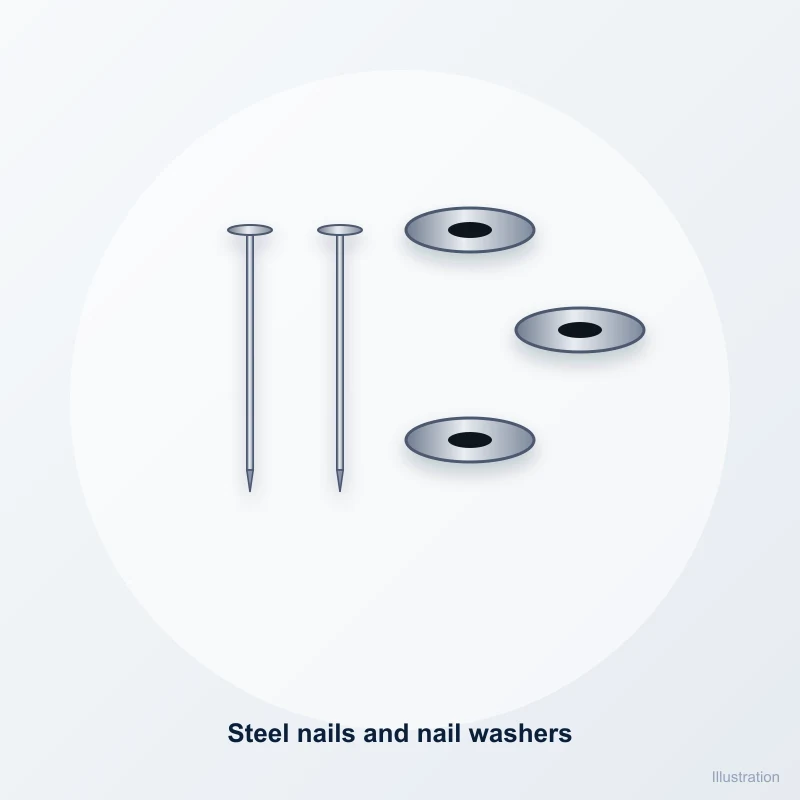
Black Steel Nails & Nail Washers
Type: black steel wire nail, flat head | Length: about 1 to 6 inch (25 to 150 mm) | Finish: black, bright or galvanised (to confirm) | Also: nail washers | Supply: by kg or carton (to confirm)
Black steel wire nails and nail washers for timber, plywood and shuttering work. Sold by length and weight, with sizes and finishes confirmed at quote stage.
Key Features
Applications

Black steel nails, also sold as wire nails or common nails, are round-wire nails with a flat head, driven by hammer into timber and plywood. Nail washers are flat discs that sit under the head to spread the hold. Falcon Link TR supplies steel nails and nail washers from Sharjah for UAE carpentry and shuttering.
What are black steel nails and wire nails?
A wire nail is cut from steel wire, given a flat head and a sharp point. "Black" usually means plain steel with a dark, oily or oxide finish rather than a zinc coat. Bright nails, galvanised nails and blued nails are other finishes of the same basic nail. Buyers in the UAE ask for them by length in inches, often by weight in kilograms or by the 25 kg carton.
A nail washer is a thin flat or cupped disc that goes on the nail before it is driven. It stops the head sinking into soft material such as insulation board, felt, thin sheet or foam. We list the washer with the nail because the two are often bought together. Confirm washer diameter and thickness with our sales team.
Steel nail sizes: how to read the range
| Length (inch) | Length (mm) | Typical wire diameter | Typical job |
|---|---|---|---|
| 1 inch | about 25 | about 2.0 mm | Light timber, thin plywood, small trim |
| 1.5 inch | about 40 | about 2.5 mm | Plywood to batten, light framing |
| 2 inch | about 50 | about 2.65 mm | General carpentry, formwork panels |
| 3 inch | about 75 | about 3.15 mm | Formwork studs and walers, rough framing |
| 4 inch | about 100 | about 4.0 mm | Heavy timber, props and bracing |
| 5 to 6 inch | about 125 to 150 | about 4.5 to 5.0 mm | Heavy timber connections |
These are typical trade sizes. Wire diameter varies between lots and between nail lengths. For exact figures, ask us to confirm size, wire gauge and head type.
How do you work out nails per kilogram?
Nails are sold by weight, so buyers often need a count. You can calculate it. The weight of one nail in grams is close to 0.00617 times the wire diameter squared (in mm) times the length (in mm). Add a small allowance for the head. Divide 1000 by that figure to get nails per kg.
For example, a 3 inch (75 mm) nail with a 3.15 mm wire weighs roughly 4.6 g, so there are about 215 nails per kg. A 2 inch (50 mm) nail at 2.65 mm is about 2.2 g, so roughly 450 per kg. Actual counts vary with head size and lot, so confirm before you plan a job on the figure.
Black, bright or galvanised: which finish?
| Finish | What it is | Where it suits | Watch out for |
|---|---|---|---|
| Black or bright steel | Plain steel, no zinc coat | Dry indoor carpentry and temporary formwork | Rusts in damp air and can stain wet concrete |
| Galvanised (GI) | Zinc-coated steel | Humid areas, exterior timber, longer service | Zinc coat can scuff when hammered hard |
| Hardened concrete steel nail | Heat-treated, often fluted shank | Light fixing to block or soft concrete | Brittle: can snap or fly. Wear eye protection |
For hot, humid and coastal sites, a bright nail left in damp timber will stain and corrode within weeks. Ask for a coated finish where the nail stays in the finished work. For shuttering that is stripped after the pour, plain steel is usual.
Wire nail vs concrete steel nail vs gun nail vs drive pin
| Name | Driven by | Fixes into | Page |
|---|---|---|---|
| Wire nail (this page) | Hammer | Timber, plywood | You are here |
| Concrete steel nail | Hammer | Light block, soft concrete | You are here |
| Gun nail | Nail gun | Timber, board, some bases | See gun nails DN27 |
| Drive pin with washer | Cartridge tool | Concrete, steel | See drive pin with red washer |
If you are fixing into hard concrete and need to hold, a nail is the wrong tool. Use a pin, plug or anchor.
Where steel nails and nail washers are used
- Fixing plywood sheets to timber studs and walers in shuttering.
- Joining timber props, braces and edge boards.
- Making pallets, crates and packing cases.
- Fixing battens, frames and fit-out carpentry.
- Fixing insulation board, felt or light sheet using a nail washer under the head.
How do you choose the right nail?
- Measure the thickness of the piece you are fixing.
- A common carpenter rule is a nail about two and a half to three times that thickness, so it grips well into the base piece.
- Use thinner wire in thin boards and near edges, which split easily, and thicker wire where strength matters.
- Choose the finish for the place of use, from the table above.
- Add washers where the material is soft or you want a wider bearing.
The most common mistake is a nail so long that the point comes out the far side, or so short it barely grips. Ordering only by inch and ignoring wire gauge is the second.
What to buy together with steel nails
Many buyers pair nails with GI binding wire for rebar tying and bolts, nuts and washers for heavier joints. For fixing into concrete, see wall plugs. The full range sits in fasteners, anchors and fixings.
How to request a quote
Send nail length, wire gauge if you know it, finish, quantity in kilograms or cartons, whether you need washers, and your delivery area through the contact page or by phone.
Use Cases
Plywood to timber shuttering
Mid-length nails hold plywood sheets to studs and walers, and strip out easily after the pour.
Props and bracing
Long, thick nails join heavy timber where the load is mainly shear.
Packing cases and pallets
Medium nails by the carton suit repeat nailing of boards.
Soft sheet fixing
A nail washer under the head spreads the bearing on insulation board, felt or thin sheet.
Frequently Asked Questions
What is a black steel nail?
It is a plain steel wire nail with a dark, uncoated finish, driven by hammer into timber and plywood. Bright and galvanised nails are the same basic nail with different finishes. The black type is common in dry indoor carpentry and temporary formwork.
What size wire nail for formwork?
Many crews use about 2 inch nails for plywood to batten and 3 inch for studs and walers, often a little longer for heavy timber. The right size depends on timber thickness, so use roughly two and a half to three times the thickness being fixed.
How many nails are in 1 kg?
It depends on length and wire diameter. As a rough guide, a 3 inch nail at about 3.15 mm wire gives roughly 215 per kg, and a 2 inch nail at 2.65 mm roughly 450. These are calculated counts, not supplier data. Ask us to confirm for your lot.
Can wire nails be used in concrete?
Not in hard concrete. Ordinary wire nails bend. A hardened concrete steel nail can go into light block or soft concrete, but it is brittle. For a reliable hold in concrete, use a drive pin, a wall plug or an anchor instead.
Which nails resist rust in UAE humidity?
Galvanised nails resist rust better than black or bright steel in humid air. For coastal or wet locations, ask about a coated finish and about stainless steel if the nail stays in the finished work. Plain steel is fine for temporary shuttering.
What is a nail washer used for?
A nail washer is a flat disc that sits under the nail head. It spreads the hold on soft material such as insulation board, felt or thin sheet, so the head does not pull through. Confirm washer diameter and thickness with our team.
More from Fasteners, Anchors & Fixings
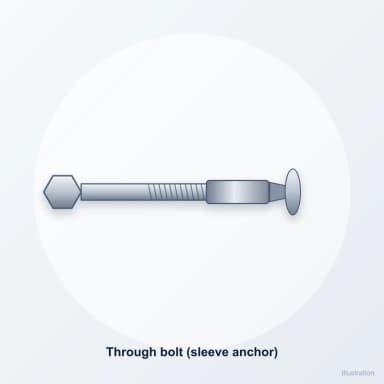
Through Bolt (Wedge / Sleeve Anchor)
Type: through bolt (wedge or sleeve anchor) | Typical sizes: M8, M10, M12, M16 | Common lengths: 75 to 200 mm | Finish: galvanised or stainless | Base: concrete
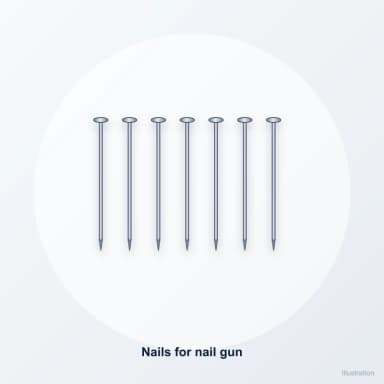
Gun Nails (DN27)
Code: DN27 (meaning to be confirmed) | Likely length: about 27 mm (to confirm) | Form: loose or collated strip (to confirm) | Used with: nail gun | Supply: boxed, quantity to confirm
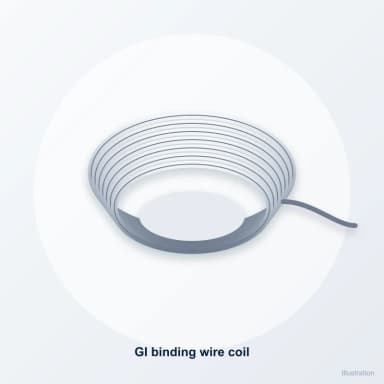
GI Wire (Galvanised Binding Wire)
Material: galvanised iron wire | Common gauges: SWG 16, 18, 20 | Supply: coils (weight varies) | Uses: rebar tying, fencing, hanging, general binding
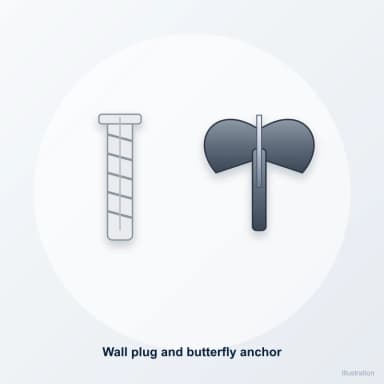
Fischer Plug & Butterfly Fischer (Wall Plugs)
Type: plastic expansion wall plug and butterfly (toggle) plug | Common plug sizes: S5, S6, S8, S10, S12 | Drill size: matches plug size | Base: concrete, block, brick, plasterboard | Supply: loose or boxed
Ready to Order? Get a Free Quote Today
Contact our team for competitive pricing, custom orders, and fast UAE-wide delivery.