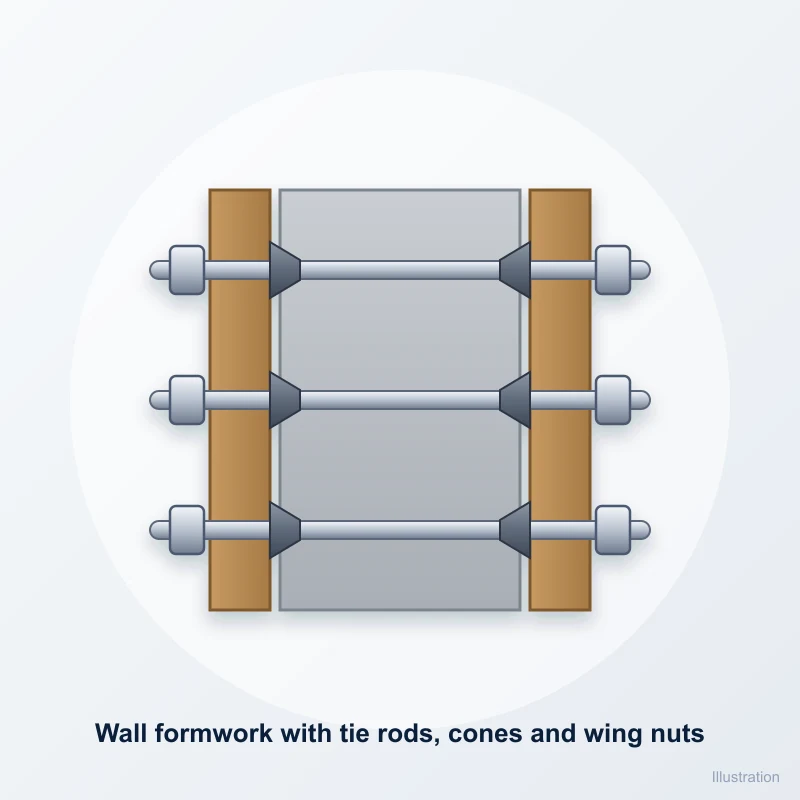
Formwork & Shuttering Accessories
Falcon Link TR supplies formwork and shuttering accessories from Sharjah, UAE. Find tie rods, wing nuts and plates, PVC cones, water stoppers, shuttering clamps, concrete spacers and rebar caps, with guides on choosing the right part.
Key Features
Applications
Product Range
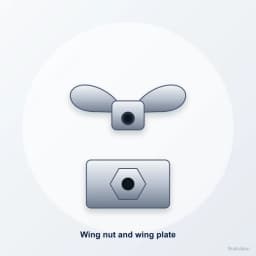
Wing Nut & Wing Plate
Parts: wing nut and wing plate (waller plate) | Fits: formwork tie rod, typical 15 or 17 mm | Material: steel or cast iron | Finish: black or galvanised (confirm) | Supply: loose, sold per piece or carton
The formwork wing nut and wing plate tighten shuttering on a tie rod. The plate spreads the load on the waler, and the winged nut is tightened by hand or hammer.
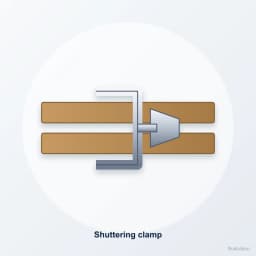
Shuttering Clamp
Material: steel | Type: formwork clamp for plywood and timber | Used on: slab edges, beam sides, columns | Supply: per piece or carton
Shuttering clamps hold plywood and timber formwork together at slab edges, beam sides and columns. Supplied from Sharjah, with a guide to choosing between clamps and tie rods.
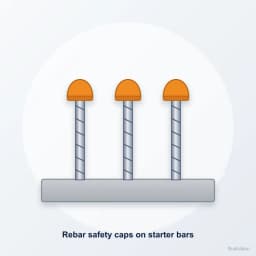
Rebar Cap (Safety Cap)
Material: plastic (PVC or similar) | Types: round, mushroom, square-top | Fits: common rebar diameters (about 8 to 32 mm) | Colour: often orange or red | Supply: per piece or bag
Rebar safety caps cover the exposed ends of reinforcement bars to protect workers from impalement and protect the steel end. Sizes matched to bar diameter, supplied from Sharjah.
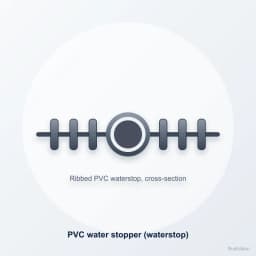
PVC Water Stopper (Waterstop)
Material: flexible PVC | Profiles: ribbed flat, centre bulb | Typical widths: 150, 200, 230, 250 mm | Typical roll length: 10 to 25 m | Use: concrete construction and movement joints | Supply: by roll or by metre
PVC water stopper (waterstop or water bar) is a flexible strip cast across concrete joints to block water in basements, tanks, pools and retaining walls. Sold in common widths and roll lengths.
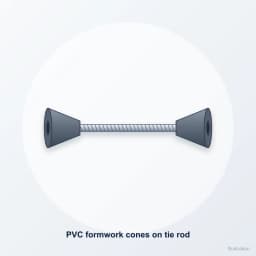
PVC Cone (Formwork Cone)
Material: PVC | Fits: formwork tie rod and spacer tube | Common tie rod sizes: 12 mm, 15 mm, 17 mm | Colour: grey or black (varies by lot) | Supply: loose, sold per piece or carton
PVC formwork cones fit on the ends of a tie rod or spacer tube. They hold the shuttering at the right wall thickness and leave a neat conical recess in the concrete face that is sealed later.
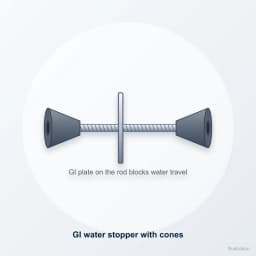
GI Water Stopper with Cones & Adaptor
Material: galvanised iron plate | Fits: formwork tie rod, typical 15, 17 or 20 mm | Supplied with: cones (confirm with sales) | Use: watertight walls and tanks | Supply: loose, per piece or carton
A GI water stopper with cones is a galvanised plate fitted on a tie rod to block water travelling along the rod in watertight concrete walls. It comes with cones that leave a recess for sealing.
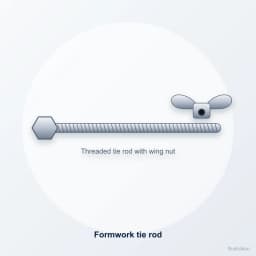
Formwork Tie Rod
Material: threaded steel rod | Common diameters: 12, 15, 17, 20 mm | Thread: continuous or rolled | Finish: plain or galvanised | Used with: wing nut, wing plate, cone
Formwork tie rods are threaded steel rods that hold wall and column shuttering together against the pressure of wet concrete. Supplied with matching wing nuts, plates and cones from Sharjah.
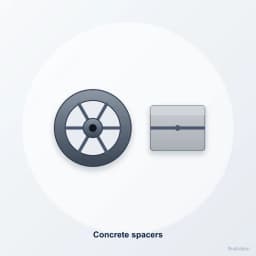
Concrete Spacer (PVC, Wheel & Cover Block)
Material: PVC / plastic or concrete | Types: wheel, cookie, bar chair, cover block | Cover: common range 15 to 75 mm | Fits: common bar diameters | Supply: per piece or bag
Concrete spacers hold reinforcement bars at the right distance from the formwork so the steel gets proper concrete cover. PVC wheel spacers and cover blocks supplied from Sharjah.
Formwork accessories are the small steel and plastic parts that hold shuttering together and protect the concrete and reinforcement inside it. Falcon Link TR supplies formwork and shuttering accessories from Sharjah for contractors, formwork subcontractors and site stores across the UAE.
What are formwork accessories?
Formwork is the temporary mould that shapes concrete. The panels and props get the attention, but accessories do the real work of holding it all together: tie rods carry the sideways pressure, wing nuts and plates tighten them, cones create a neat recess, spacers keep the steel in the right place, and water stoppers keep walls watertight.
Formwork accessories and their job
| Part | What it does | Page |
|---|---|---|
| Formwork tie rod | Holds two form faces together against concrete pressure | Formwork tie rod |
| Wing nut and wing plate | Tighten the rod against the form by hand or hammer | Wing nut and wing plate |
| PVC cone | Spaces the form and leaves a sealable recess | PVC cone |
| PVC water stopper | Seals construction joints against water travel | PVC water stopper |
| GI water stopper with cones | Blocks water along the tie rod in watertight walls | GI water stopper with cones |
| Shuttering clamp | Holds forms at slab edges, beam sides and columns | Shuttering clamp |
| Concrete spacer | Keeps reinforcement at the correct cover | Concrete spacer |
| Rebar cap | Protects people from exposed bar ends | Rebar cap |
| PVC chamfer | Forms a bevelled edge on columns and beams | PVC chamfer |
What do you need for a typical wall pour?
A wall form usually needs tie rods, a wing nut and plate on each end, cones to set the thickness and leave a recess, spacers on the reinforcement and chamfer strips at the corners. For watertight basements and tanks, add water stoppers at the construction joints and on the tie rods.
Which accessory for which element?
| Element | Common accessories |
|---|---|
| Basement and retaining walls | Tie rods, wing nuts, cones, water stoppers, spacers |
| Columns | Clamps or tie rods, chamfer, spacers, rebar caps |
| Slab edges and beams | Shuttering clamps, spacers, chamfer |
| Water tanks | Tie rods with water stoppers, PVC waterstop at joints, spacers |
| Lift cores and shear walls | Tie rods, nuts, plates, cones, spacers |
Choosing formwork accessories for UAE sites
- Heat speeds up concrete setting, so check that nuts and clamps can still be released when you strike.
- Humidity and coastal air rust bare steel quickly, so oil and store accessories under cover.
- Match sizes: a 15 mm rod needs a 15 mm nut and plate.
- Follow the formwork designer for spacing and loads, not general rules.
How a wall pour comes together
- Set out the wall and fix the first form face.
- Place the reinforcement with spacers on the bars.
- Fit cones and tie rods through the first face.
- Close the second form face over the rods.
- Fit plates and wing nuts and tighten evenly.
- Check line, level and bracing.
- Pour and vibrate in lifts as the designer instructs.
- Strike the forms when the concrete is strong enough, pull the cones and seal the holes.
Matching sizes across the kit
| Item | What must match | Why it matters |
|---|---|---|
| Tie rod and wing nut | Diameter and thread | A mismatched nut strips under load |
| Wing nut and wing plate | Hole and nut size | The plate must seat the nut fully |
| Cone and tie rod | Rod diameter and cone seat | A loose cone leaks slurry |
| Spacer and bar | Bar diameter and cover | Sets the concrete cover |
Water-retaining structures
Tanks, basements and pump rooms need extra care. A PVC waterstop goes in the construction joints, and a GI water stopper plate on each tie rod blocks water travelling along the rod. The hole left by each cone is then sealed according to the engineer's detail.
Common problems on site
| Problem | Likely cause | Fix |
|---|---|---|
| Wall thickness varies | Cones or rods loose | Tighten and check spacing before the pour |
| Slurry leaks at the tie hole | Cone not seated | Reseat or replace the cone |
| Nut will not release | Concrete on the thread | Clean and oil after every use |
| Steel visible at the face | Spacers missing or crushed | Check cover before concreting |
Care and storage
- Clean concrete off every part as soon as the form is struck.
- Oil threads and store rods flat and dry.
- Sort by size so mismatches do not happen on the next job.
- Replace bent rods and worn nuts instead of forcing them.
Why a complete kit saves time
Most delays on a formwork job come from a missing nut, a wrong-size cone or a short rod, not from the big panels. Ordering the full set from one supplier means the sizes match, the parts arrive together and the crew does not stop to chase one small item.
Checklist before the pour
- Count rods, nuts, plates and cones against the drawing.
- Check that all sizes match across the kit.
- Check spacers and chamfer are fixed and secure.
- Check water stoppers are in the right joints.
- Check bracing and clamps are tight.
How we help
Send us your drawing or a list of parts and quantities and we will confirm what we can supply together. If you are not sure what you need, tell us the element, the wall thickness and the pour height, and we will suggest the right parts to discuss with your formwork designer.
Related guides
Read more on choosing a tie rod length, setting concrete cover with spacers and protecting exposed bar ends. For fixings, see our fasteners and anchors range.
Prices, availability and delivery for each part are confirmed by our sales team when you send your list, so you always get a quote that matches the sizes and quantities you actually need.
If you are not sure whether a part is compatible with the system you already own, send us a photo of the part with a ruler or caliper in view, and we will help you match it.
How to order formwork accessories
- List each part and the diameter or size.
- Count the quantity from the drawing.
- Add an allowance for loss and reuse wear.
- Send the list and delivery area through our contact page.
Looking for other site items? See fasteners, anchors and fixings and the full product catalogue A to Z.
Frequently Asked Questions
What are formwork accessories?
They are the small steel and plastic parts that hold formwork together and support the concrete work, such as tie rods, wing nuts, cones, clamps, spacers and water stoppers.
What is the difference between a tie rod and a threaded rod?
A tie rod is sold for holding formwork and matched to nuts and plates. A threaded rod is general all-thread for hangers and fixings. The thread may look alike but the use and rating differ.
What is a water stopper used for?
A water stopper blocks water travelling through a concrete joint or along a tie rod. PVC waterstop goes in construction joints, and a GI water stopper plate is fitted on tie rods in watertight walls.
Which accessories do I need for a column?
Usually clamps or tie rods, chamfer strips for the corners, spacers on the reinforcement, and rebar caps on any bars left sticking out. Your formwork designer will list the exact parts.
Can you supply the whole set in one order?
Yes. Send us the list of parts, sizes and quantities along with your delivery area, and we will confirm what we can supply together in one order and tell you about anything that needs to be sourced.
How do I choose between a clamp and a tie rod?
Use tie rods where both form faces are accessible, as in walls. Use clamps at slab edges, beam sides and small columns where nothing can pass through the form.
You May Also Need
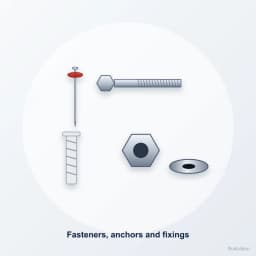
Fasteners, Anchors & Fixings
Fasteners, anchors and fixings for concrete, block, steel and plasterboard: drive pins, nails, wall plugs, through bolts, bolts and nuts, and GI wire.

Lighting Solutions
LED lighting solutions for UAE construction, industrial, and commercial projects. High-bay LED fittings for warehouses (100W–200W), IP65 batten lights, LED panel lights, emergency luminaires with 3-hour backup, and site work lights. Sourced for UAE climate. CE/RoHS certified.

Stationery Products
Wholesale stationery and office supplies stocked in Sharjah: A4 copy paper (80gsm), writing instruments, ring binders, filing supplies, cable and pipe markers, site diaries, and printer consumables. Bulk pricing for corporate offices, government entities, and construction site offices.
Ready to Order? Get a Free Quote Today
Contact our team for competitive pricing, custom orders, and fast UAE-wide delivery.