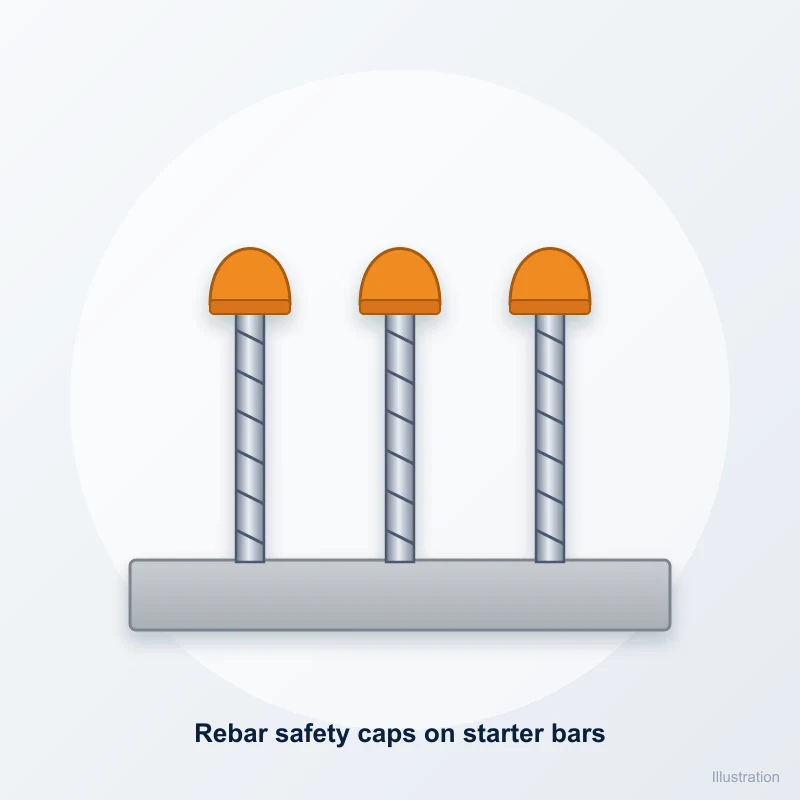
Rebar Cap (Safety Cap)
Material: plastic (PVC or similar) | Types: round, mushroom, square-top | Fits: common rebar diameters (about 8 to 32 mm) | Colour: often orange or red | Supply: per piece or bag
Rebar safety caps cover the exposed ends of reinforcement bars to protect workers from impalement and protect the steel end. Sizes matched to bar diameter, supplied from Sharjah.
Key Features
Applications

A rebar cap is a plastic safety cap that fits over the exposed end of a reinforcement bar. It protects workers from scratches and impalement injuries and keeps rain and dust off the steel end. Falcon Link TR supplies rebar caps for UAE building sites from Sharjah.
Why are rebar caps used on site?
Starter bars and column bars stick out of the concrete for weeks. A worker who trips or leans on one can be badly hurt. A brightly coloured cap makes the bar visible and blunts the end. Many site safety plans ask for caps on any bar end within reach of people.
Types of rebar caps
| Type | Shape | Typical use |
|---|---|---|
| Round cap | Simple cylindrical cap | General bar ends |
| Mushroom cap | Wide, flat top | Bars at head height or where people may fall against them |
| Square-top cap | Flat square cover | Wide protection on bar bundles |
| Thread bar cap | Cap for threaded bar ends | Protecting thread on bolts and thread bar |
How to choose the right cap size
| Bar diameter | What to check |
|---|---|
| Small bars (around 8 to 12 mm) | Cap must grip so wind does not blow it off |
| Medium bars (around 16 to 20 mm) | Common for columns and starter bars |
| Large bars (around 25 to 32 mm) | Check inner diameter and wall thickness |
Caps are sized by the bar diameter they fit. Always send the bar size, because a loose cap falls off and a tight one splits.
Selection checklist
- Measure or confirm the bar diameter.
- Choose round caps for general use and mushroom caps for head-height bars.
- Pick a bright colour that matches your site safety plan.
- Order a small extra quantity because caps get lost and crushed.
Rebar caps on UAE sites
- Heat and sun can make cheap plastic brittle, so check caps on long-standing bars.
- Remove caps before concrete is poured over the bar and bin them, do not leave them in the pour.
- Do not rely on a cap as the only safety measure. Follow your site safety rules.
Colour and visibility
Bright orange, red or yellow caps are used because they show up in dust and low light. Pick one colour for the whole site if possible, so the safety team can spot any bar left uncapped from a distance.
Fitting and removing caps
- Clean the end of the bar of mud and loose rust.
- Push the cap on by hand until it seats firmly on the bar.
- Check by hand that it does not spin off or slide down.
- Remove caps before the next lift of concrete covers the bar and discard split ones.
Common mistakes with rebar caps
- Choosing a cap that is too large, so wind or vibration drops it.
- Forcing a small cap onto a big bar until it splits.
- Leaving caps buried in the pour, creating a weak pocket.
- Using one cap on a bundle of bars where each end needs its own.
- Treating the cap as the only protection instead of also guarding the area.
Storage
Store spare caps in a covered bin, away from direct sun. Plastic left in strong sun for months can turn brittle, so use older stock first and check it before fitting.
Planning quantities
Count the exposed bar ends on the next lift or the open starter bars, then add a margin for loss. Sites usually reorder every few weeks, because caps are knocked off, crushed or buried as work moves on.
What to send us for a quote
- The bar diameters you need to cover.
- The cap type: round, mushroom or thread bar.
- The colour your safety plan asks for.
- The quantity and delivery area.
What to buy with rebar caps
Rebar caps go with concrete spacers for cover, GI binding wire for tying bars, and the rest of the formwork and shuttering accessories.
Request a quote
Send the bar diameters, cap type, colour and quantity through our contact page.
Use Cases
Starter bars
Caps are placed on bars sticking out of slabs and footings to protect workers moving around.
Column cages
Caps stop bar ends scratching people and make the cage visible.
Steel yards
Caps on bar ends in storage protect handlers loading and unloading.
Frequently Asked Questions
What is a rebar cap used for?
It is a plastic cap over the end of a reinforcement bar that protects people from scratches and impalement injuries and keeps rain and dust off the steel end.
What sizes of rebar caps are available?
Caps are made for common bar diameters, from small bars of about 8 mm up to about 32 mm. Give us your exact bar diameter and we will confirm the matching cap.
Are rebar caps mandatory on site?
Requirements come from the project safety plan and local rules, not from the supplier. Many sites require caps where bar ends are within reach of people. Check your safety officer or main contractor.
What is the difference between a rebar cap and a thread bar cap?
A rebar cap protects plain or deformed reinforcement bar ends. A thread bar cap covers the threaded end of a bolt or thread bar to protect the thread. They are not interchangeable.
Can rebar caps be reused?
Yes, if they are not split, crushed or brittle from sun. Check each cap before refitting, and replace any that no longer grip the bar firmly.
Should rebar caps be left on when concrete is poured?
No. Remove caps from bars that will be covered, because a plastic cap inside the concrete is a weak spot. Keep caps on bars that stay exposed after the pour.
More from Formwork & Shuttering Accessories
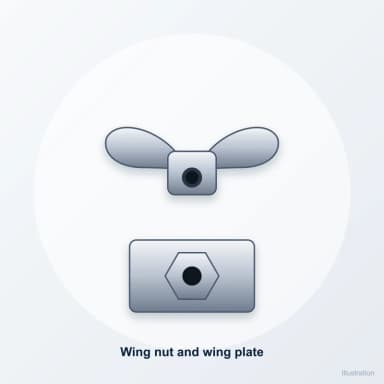
Wing Nut & Wing Plate
Parts: wing nut and wing plate (waller plate) | Fits: formwork tie rod, typical 15 or 17 mm | Material: steel or cast iron | Finish: black or galvanised (confirm) | Supply: loose, sold per piece or carton
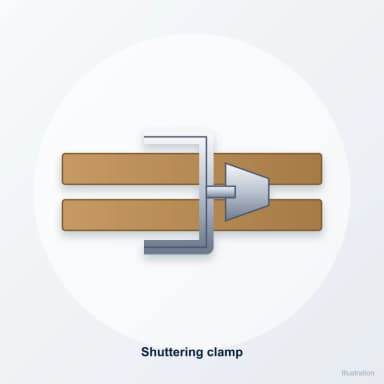
Shuttering Clamp
Material: steel | Type: formwork clamp for plywood and timber | Used on: slab edges, beam sides, columns | Supply: per piece or carton
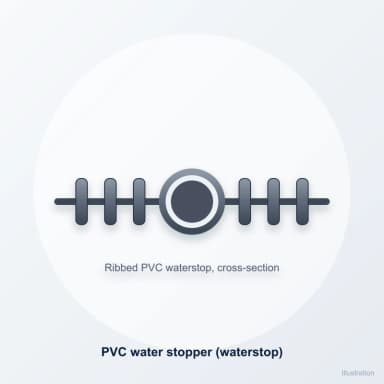
PVC Water Stopper (Waterstop)
Material: flexible PVC | Profiles: ribbed flat, centre bulb | Typical widths: 150, 200, 230, 250 mm | Typical roll length: 10 to 25 m | Use: concrete construction and movement joints | Supply: by roll or by metre
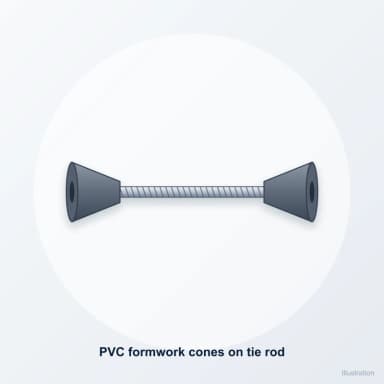
PVC Cone (Formwork Cone)
Material: PVC | Fits: formwork tie rod and spacer tube | Common tie rod sizes: 12 mm, 15 mm, 17 mm | Colour: grey or black (varies by lot) | Supply: loose, sold per piece or carton
Ready to Order? Get a Free Quote Today
Contact our team for competitive pricing, custom orders, and fast UAE-wide delivery.