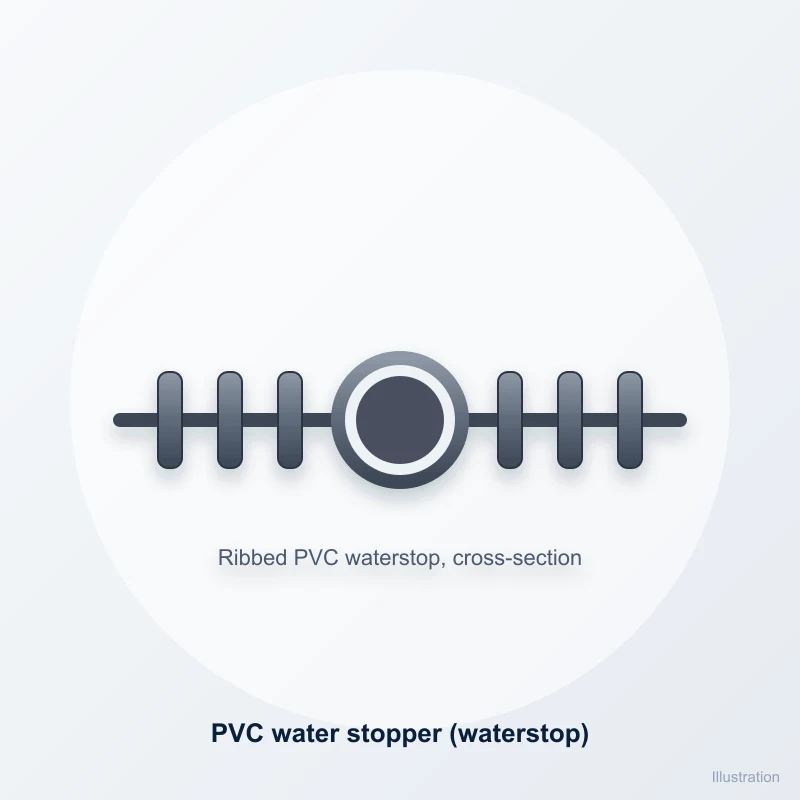
PVC Water Stopper (Waterstop)
Material: flexible PVC | Profiles: ribbed flat, centre bulb | Typical widths: 150, 200, 230, 250 mm | Typical roll length: 10 to 25 m | Use: concrete construction and movement joints | Supply: by roll or by metre
PVC water stopper (waterstop or water bar) is a flexible strip cast across concrete joints to block water in basements, tanks, pools and retaining walls. Sold in common widths and roll lengths.
Key Features
Applications

A PVC water stopper, also sold as PVC waterstop or water bar, is a flexible plastic strip cast across a concrete joint to stop water passing through it. It is used in basements, water tanks, pools and retaining walls across the UAE. Falcon Link TR supplies PVC water stoppers from Sharjah in common widths and roll lengths.
What is a PVC water stopper and how does it work?
Concrete itself is fairly watertight. The weak point is the joint, where one pour meets the next. A PVC water stopper is laid across that joint so half of the strip is buried in the first pour and half is left sticking out to be buried in the second. The ribs or bulbs on the strip grip the concrete and make the path for water much longer and more awkward.
The strip is flexible, so it keeps working when the joint opens and closes a little with heat and load. That is why it is used at construction joints (where one day's pour stops) and at movement or expansion joints (where the structure is allowed to move).
Water stopper, waterstop, water bar: which product is this?
The name causes a lot of mix-ups when buyers search. Here is how the terms are used in the UAE trade.
| Name you may see | What it means | Where to look |
|---|---|---|
| PVC waterstop, water bar, water stop | A PVC strip cast into a concrete joint, sold by the metre or in rolls | This page |
| GI water stopper with cones | A metal disc fitted on a formwork tie rod to block water travelling along the rod | Our GI water stopper page |
| Water stopper adaptor | Not a standard trade term. Usually means the cone or adaptor fitted with the tie rod water stopper, so check the other page | GI water stopper with cones |
| Plumbing water stopper | Sink, bath, hose or shower plug. Not a construction product and not sold here | Not applicable |
| Hydrophilic strip | A rubber-like strip that swells when wet. A different product from PVC | Ask our sales team |
PVC water stopper types and sizes
PVC waterstops are chosen by profile and width. The figures below are typical trade values. The project specification and the consultant decide the final choice.
| Profile | Typical widths | Used at | Notes |
|---|---|---|---|
| Ribbed, flat | 150, 200, 230, 250 mm | Construction joints in walls, slabs and raft | Most common type for basements and tanks |
| Centre bulb (dumbbell) | 200 to 320 mm | Expansion and movement joints | The hollow bulb sits in the gap and flexes |
| External or face-fixed | Varies | Joints on the outer face of a wall | Ask for details before ordering |
| Kicker or starter type | Varies | Base of walls on a slab | Check the profile drawing |
Rolls are typically around 10 to 25 m long. Thickness depends on width and profile, so confirm it in your quote request. The widths buyers ask for most often are 200 mm, 230 mm and 250 mm.
Where is a PVC water stopper used?
| Structure | Joint to protect |
|---|---|
| Basement and car park walls | Vertical and horizontal construction joints |
| Water tanks and swimming pools | Wall to floor and wall to wall joints |
| Raft and pile cap foundations | Day-joints in large pours |
| Retaining walls and culverts | Movement joints between bays |
| Lift pits and pump rooms | Base joint of the pit walls |
| Stormwater and sewage chambers | Wall and slab joints |
How is PVC waterstop installed?
- Mark the joint line. The strip must sit centred on it, with equal width each side.
- Fix the strip to the reinforcement or form edge with wire clips or a split-form arrangement. Do not nail through the ribbed area.
- Keep the strip straight and keep the bulb clear of concrete that could block it.
- Join pieces by heat welding with a thermostat welding iron. Glue and tape are not a reliable joint.
- Place and vibrate the concrete carefully so it flows around the ribs without moving the strip.
- Clean the exposed half before the next pour and protect it from damage.
PVC, rubber, hydrophilic or GI: how do they compare?
| Type | Strength | Limit |
|---|---|---|
| PVC waterstop | Flexible, easy to weld on site, wide range of widths | Needs careful fixing so it does not fold during the pour |
| Rubber waterstop | Very elastic, used at large movement joints | Joints are usually vulcanised, which is harder on site |
| Hydrophilic strip | Swells to seal thin joints | Needs dry storage and early protection from water |
| GI or steel plate | Simple strip for light-duty joints | Less flexible, can rust if the coating is damaged |
Heat, humidity and approvals on UAE sites
Keep rolls in cartons and under cover. Strip left in direct summer sun can soften and kink, which makes straight fixing harder. Dust and laitance on the exposed half must be washed off before the second pour, or the joint will not bond properly.
On coastal and high groundwater sites, joints are under constant water and chloride pressure, so the water stopper is not a place to cut corners. Many projects need a material submittal before the product reaches site. Tell us early if you need a datasheet or sample for the consultant.
How to choose and what to avoid
- Take the profile and width straight from the drawing or specification.
- Match the roll length to the joint length and add a small allowance for laps, cuts and wastage.
- Do not swap a flat ribbed strip for a centre bulb strip at a movement joint, or the other way round.
- Do not mix up a PVC strip with the tie rod water stopper. They solve different problems.
What to buy together with PVC water stoppers
Watertight walls usually need more than the strip. Most buyers add the GI water stopper with cones and formwork tie rod for the tie positions, the PVC cone for neat recesses and the concrete spacer to keep reinforcement at the right cover. A PVC chamfer gives the wall base a cleaner edge. See the full formwork and shuttering accessories range.
How to request a quote
Send the profile, width, total length or number of rolls, and your delivery area through the contact page or by phone. A joint drawing or photo helps us match the right strip.
Use Cases
Basement wall to slab joint
A ribbed strip is centred on the joint line at the base of the wall so water cannot track through the day-joint.
Tank and pool walls
Strip runs around wall corners and the floor joint, welded into a continuous loop so the joint line has no gaps.
Movement joints in long retaining walls
A centre bulb strip sits in the gap between bays, letting the wall move with temperature without opening a leak path.
Raft foundation day-joints
Strip is fixed across stop-end formwork so the following pour grips the exposed half.
Frequently Asked Questions
What is a PVC water stopper used for?
It is cast across a concrete joint to block water. Half sits in the first pour and half in the second, so water has a long, awkward path through the joint. It is used in basements, tanks, pools, culverts and retaining walls.
What is the difference between a waterstop and a water stopper?
In construction they often mean the same PVC strip. Some suppliers use water stopper for a different part: a metal disc on a formwork tie rod. We list them on separate pages so you can pick the right one: this page covers the strip.
Which width of PVC waterstop do I need?
Widths of 150, 200, 230 and 250 mm are common. The drawing or specification sets the profile and width, usually by wall thickness and water pressure. If you are unsure, send us the joint detail and we will help match a strip.
How do you join PVC waterstop on site?
Heat welding with a thermostat-controlled welding iron is the usual method. The cut ends are warmed until they soften, pressed together and held until cool. Glue, tape or simple overlaps are not a reliable water-tight joint.
Is PVC or rubber waterstop better?
It depends on the joint. PVC is flexible, easy to weld and fine for most construction and moderate movement joints. Rubber suits large movement but is harder to join on site. Your engineer usually decides, so follow the specification.
Does a tie rod hole need a PVC waterstop?
No. A PVC strip protects the joint line. Tie rod holes are a different leak path and are handled with a tie rod water stopper and cones, then sealed after the formwork is struck.
How much PVC waterstop do I need?
Measure the full length of every joint it must cover, then add a small allowance for laps, corners and cut-offs. Because rolls come in fixed lengths, round up to whole rolls and confirm roll length with our team.
More from Formwork & Shuttering Accessories
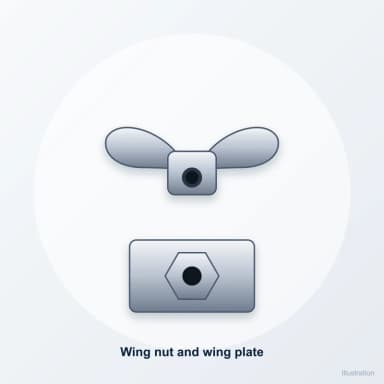
Wing Nut & Wing Plate
Parts: wing nut and wing plate (waller plate) | Fits: formwork tie rod, typical 15 or 17 mm | Material: steel or cast iron | Finish: black or galvanised (confirm) | Supply: loose, sold per piece or carton
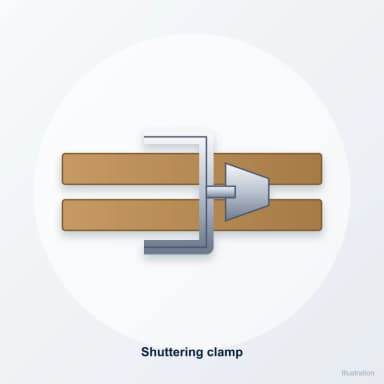
Shuttering Clamp
Material: steel | Type: formwork clamp for plywood and timber | Used on: slab edges, beam sides, columns | Supply: per piece or carton
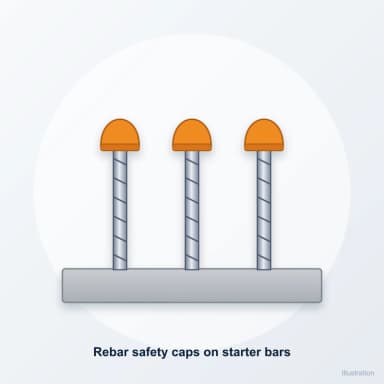
Rebar Cap (Safety Cap)
Material: plastic (PVC or similar) | Types: round, mushroom, square-top | Fits: common rebar diameters (about 8 to 32 mm) | Colour: often orange or red | Supply: per piece or bag
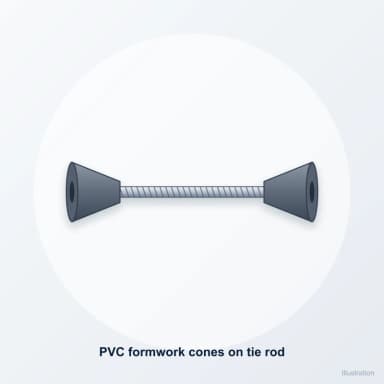
PVC Cone (Formwork Cone)
Material: PVC | Fits: formwork tie rod and spacer tube | Common tie rod sizes: 12 mm, 15 mm, 17 mm | Colour: grey or black (varies by lot) | Supply: loose, sold per piece or carton
Ready to Order? Get a Free Quote Today
Contact our team for competitive pricing, custom orders, and fast UAE-wide delivery.