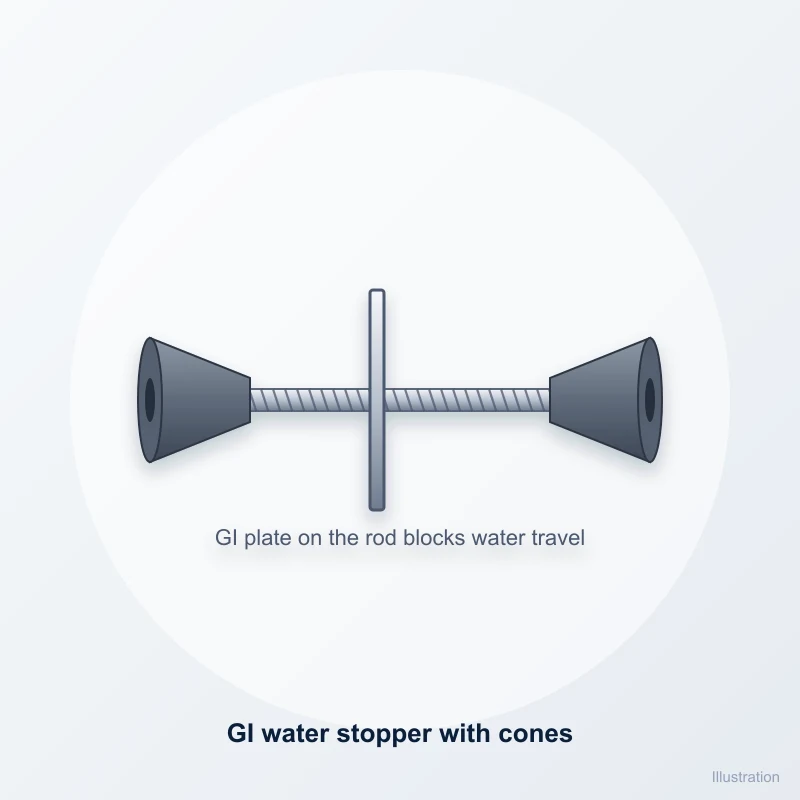
GI Water Stopper with Cones & Adaptor
Material: galvanised iron plate | Fits: formwork tie rod, typical 15, 17 or 20 mm | Supplied with: cones (confirm with sales) | Use: watertight walls and tanks | Supply: loose, per piece or carton
A GI water stopper with cones is a galvanised plate fitted on a tie rod to block water travelling along the rod in watertight concrete walls. It comes with cones that leave a recess for sealing.
Key Features
Applications

A GI water stopper with cones is a galvanised metal disc that slides on to a formwork tie rod, with a cone at each end. The disc sits inside the wall and blocks water creeping along the rod. It is used for watertight walls and tanks. Falcon Link TR supplies it from Sharjah for UAE concrete work.
What is a GI water stopper with cones?
A tie rod runs straight through a wall from one form face to the other. After the pour, the rod is a thin steel path across the full thickness of the concrete. Water under pressure can follow the rod, or the thin gap around it, from the wet side to the dry side. The water stopper breaks that path. It is a flat plate with a hole, fixed on the rod at mid-wall, so any water travelling along the rod meets a wide barrier cast into the concrete.
The cones sit on the rod at the form faces. They hold the shuttering at the right spacing and leave a tapered recess on each side, which is filled and sealed after the formwork is struck. Buyers in the UAE often ask for the whole set at once: water stopper, cones, tie rod and wing nuts.
Is this the same as a PVC waterstop?
No. This is the most common mix-up in the category. The two products solve different leaks.
| GI water stopper with cones | PVC water stopper (waterstop) | |
|---|---|---|
| Shape | Round or square metal plate on a tie rod | Long flexible strip, sold by roll or metre |
| Where it goes | At each tie rod position, mid-wall | Along the length of a concrete joint |
| What it blocks | Water travelling along the tie rod | Water passing through a joint between pours |
| Page | This page | PVC water stopper |
A watertight basement wall often needs both: the strip at the joints and the plate at every tie rod.
What is in the set and what fits what?
The table shows how the parts are normally matched. Sizes are typical trade values. Ask us to confirm what is supplied in your lot.
| Part | What it does | What to match |
|---|---|---|
| Water stopper plate (GI) | Blocks seepage along the rod, sits mid-wall | Rod diameter and hole size |
| Cone, one per face | Holds form spacing and leaves a recess | Rod diameter, cone depth |
| Tie rod | Carries the load across the form | Typically 15, 17 or 20 mm |
| Wing nut and wing plate | Tightens the shuttering on the rod | Same thread as the rod |
| Spacer tube (if used) | Sets the exact wall thickness | Tube outer diameter and cone fit |
If you also use spacer tubes, the plate and cones must suit the tube as well as the rod. Send a sample if you are not sure.
Where is it used?
| Structure | Why a tie rod water stopper helps |
|---|---|
| Basement and retaining walls | Water pressure builds on the soil side and tries to follow any rod |
| Water tanks and sumps | Walls are permanently wet on one side |
| Swimming pools and balance tanks | Constant pressure and chlorinated water |
| Lift pits and pump rooms | Below groundwater level in many areas |
| Culverts and drainage chambers | Wet on both sides, often for long periods |
How do you fit a water stopper with cones?
- Cut the tie rod to length for the wall thickness plus the form build-up on both sides.
- Slide the water stopper on to the rod and fix it at mid-wall, centred between the two form faces.
- Fit a cone on each end of the rod, then pass the rod through the form faces.
- Tighten the wing nuts on the wing plates until the cones are pressed firmly against the form.
- After striking, remove the cones, cut or unscrew the rod below the surface and fill the recess with non-shrink grout or repair mortar.
Heat, humidity and coastal sites
Galvanised plate is the usual choice because the part is buried in concrete for the life of the structure. In coastal Sharjah, Ajman and Umm Al Quwain, salty air can attack bare steel quickly before the pour, so keep parts dry and off the ground. Hot weather speeds the set. Fit the plates correctly before the pour starts, because they cannot be adjusted once concrete is in.
Many UAE projects ask for a material submittal. Tell us if you need a datasheet or sample for the consultant, and we will say what we can provide.
How to choose and common mistakes
- Count one plate per tie rod position on the drawing, if your detail calls for it. Not every tie needs one.
- Do not place the plate near the form face. Mid-wall is the point.
- Check that the plate hole is a snug fit on the rod and that the cones suit the same rod size.
- Do not leave the cone recess unsealed. Grout it fully after striking.
What to buy together with the water stopper
The set works with the formwork tie rod, the wing nut and wing plate and spare PVC cones for repeat pours. For the joints between pours, add a PVC water stopper strip. Reinforcement near the plates is held at the right cover with a concrete spacer. Browse the whole formwork and shuttering accessories range for the rest.
How to request a quote
Send the tie rod diameter, wall thickness, number of positions, whether you need cones in the set, and your delivery area through the contact page or by phone. Photos of an existing plate help us match it.
Use Cases
Basement wall with high groundwater
Plates sit mid-wall on every tie rod position so water cannot follow the rod across the wall.
Concrete water tank
Used together with a PVC waterstop at joints, so both leak paths are covered before the tank is filled.
Swimming pool shell
Tie rod water stoppers limit seepage along the rods, and the recesses are grouted after the formwork is struck.
Pump room below ground level
Water on the soil side is blocked at each tie, so the wall stays dry on the room side.
Frequently Asked Questions
What is a GI water stopper with cones?
It is a galvanised plate placed on a formwork tie rod at mid-wall, with a cone on each end. The plate blocks water travelling along the rod. The cones hold the form spacing and leave a recess that is sealed with grout after striking.
What is the difference between this and a PVC waterstop?
A PVC waterstop is a long strip cast across a joint between two pours. A GI water stopper is a small plate on one tie rod. One protects joint lines, the other protects tie holes. Watertight walls often use both.
What is a water stopper adaptor?
It is not a standard trade term. Buyers usually mean the cone or adaptor used with the tie rod water stopper. If you are searching with that name, send us a photo and we will confirm which part you need.
Which tie rod sizes does it fit?
Tie rods of 15, 17 and 20 mm are typical in UAE wall formwork. The plate hole and cones are matched to the rod, so tell us the rod diameter and whether you also use a spacer tube.
Do I need one at every tie rod?
Not always. Watertight walls usually need them at every tie, but other walls may not. The drawing or the structural engineer sets this. If the detail is unclear, ask the consultant before buying.
How do I seal the hole after striking?
Remove the cones, cut or unscrew the rod below the surface, clean and wet the recess, then fill it with non-shrink grout or repair mortar. For water-retaining walls, follow the sealing detail in the project specification.
More from Formwork & Shuttering Accessories
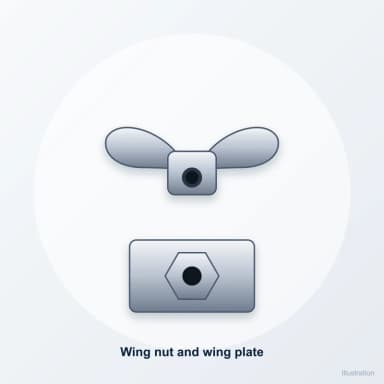
Wing Nut & Wing Plate
Parts: wing nut and wing plate (waller plate) | Fits: formwork tie rod, typical 15 or 17 mm | Material: steel or cast iron | Finish: black or galvanised (confirm) | Supply: loose, sold per piece or carton
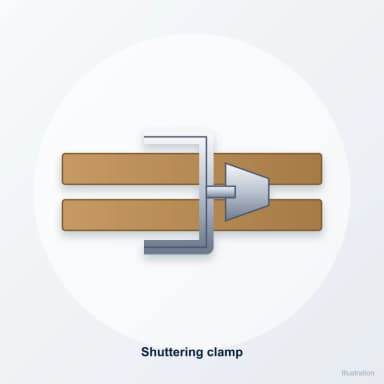
Shuttering Clamp
Material: steel | Type: formwork clamp for plywood and timber | Used on: slab edges, beam sides, columns | Supply: per piece or carton
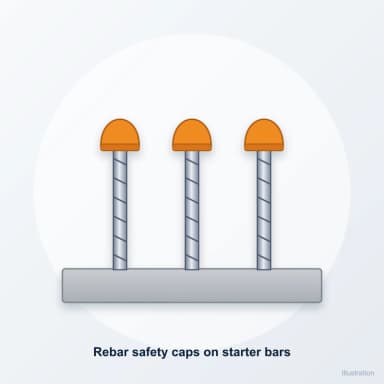
Rebar Cap (Safety Cap)
Material: plastic (PVC or similar) | Types: round, mushroom, square-top | Fits: common rebar diameters (about 8 to 32 mm) | Colour: often orange or red | Supply: per piece or bag
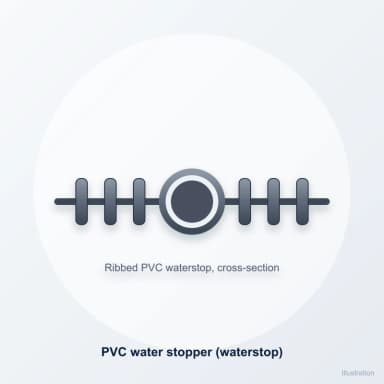
PVC Water Stopper (Waterstop)
Material: flexible PVC | Profiles: ribbed flat, centre bulb | Typical widths: 150, 200, 230, 250 mm | Typical roll length: 10 to 25 m | Use: concrete construction and movement joints | Supply: by roll or by metre
Ready to Order? Get a Free Quote Today
Contact our team for competitive pricing, custom orders, and fast UAE-wide delivery.