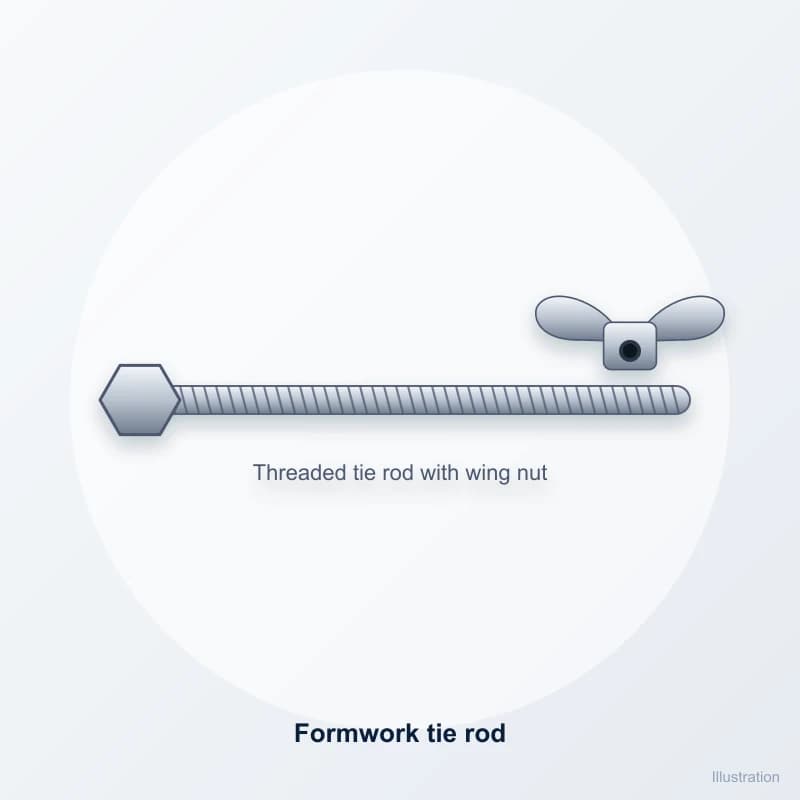
Formwork Tie Rod
Material: threaded steel rod | Common diameters: 12, 15, 17, 20 mm | Thread: continuous or rolled | Finish: plain or galvanised | Used with: wing nut, wing plate, cone
Formwork tie rods are threaded steel rods that hold wall and column shuttering together against the pressure of wet concrete. Supplied with matching wing nuts, plates and cones from Sharjah.
Key Features
Applications

A formwork tie rod is a threaded steel rod that passes through a wall or column form and holds the two shuttering faces together while concrete is poured. It carries the sideways pressure of wet concrete. Falcon Link TR supplies formwork tie rods, with the wing nuts, plates and cones that go on them, from Sharjah.
What does a tie rod do in wall formwork?
Wet concrete pushes outwards on the shuttering with a force that grows with the height of the pour. Props and walers help, but the rods across the wall do most of the work. Each rod is tensioned with a wing nut and plate on both faces, so the form cannot bulge and the wall stays at its design thickness.
After the concrete has gained strength, the nuts are released and the forms are struck. Depending on the system, the rod is pulled out through a spacer tube or cut off below the surface. The hole is then sealed.
Tie rod sizes and what they are used for
| Diameter | Typical use | Notes |
|---|---|---|
| 12 mm | Light walls and small columns | Check the working load with your formwork designer |
| 15 mm | The most common size for general wall and column forms | Pairs with standard 15 mm wing nuts and plates |
| 17 mm | Taller walls and heavier pours | Often used where pour height is high |
| 20 mm | Heavy formwork systems | Confirm thread and nut size before ordering |
These are typical trade sizes. The safe working load depends on the steel grade, the thread and the system, so ask your formwork designer or engineer for the figure, not the supplier.
Tie rod, threaded rod and spacer tube: which one do you need?
| Item | What it is | When to choose it |
|---|---|---|
| Formwork tie rod | Rod sold for holding shuttering, usually with matching nuts and plates | Wall, column and lift core forms |
| Threaded rod | General all-thread rod for hangers, supports and anchoring | MEP supports and fixings, see threaded rod |
| Spacer tube | Plastic or fibre tube that surrounds the rod | When the rod will be pulled out and reused |
| Rod with water stopper | Rod carrying a metal plate that blocks water travel | Watertight walls, see GI water stopper with cones |
How to work out the tie rod length
Add the finished wall thickness, the thickness of both form faces, the waler or strongback on each side, the plate and the nut, plus enough rod beyond the nut to grip the thread. A short rod cannot be tightened properly, and a very long one wastes steel and gets in the way of workers.
- Measure the finished wall or column thickness.
- Add the form face thickness and the waler depth on both sides.
- Add the plate and wing nut allowance on both sides.
- Add a small thread allowance beyond the nut.
- Round up to the nearest rod length that you can cut or buy.
Choosing the right tie rod for UAE sites
- Humid and coastal sites: galvanised rod resists rust while it sits in the form and in storage.
- Reuse: if rods will go through spacer tubes and be reused, keep the threads clean and oiled.
- Matching parts: a 15 mm rod needs a 15 mm nut and plate. Mixed sizes slip or strip.
- Visible faces: use cones so the rod end ends up inside the wall and the recess can be sealed.
A typical wall formwork build-up
| Layer | What it does |
|---|---|
| Form face (plywood or panel) | Shapes the concrete surface |
| Vertical studs or soldiers | Support the face and spread the load |
| Horizontal walers | Carry the load to the tie rod positions |
| Wing plate and wing nut | Lock the rod tight against the walers |
| Tie rod with cone or spacer tube | Holds both faces at the wall thickness |
Common mistakes with tie rods
- Mixing rod sizes and nuts, so the thread strips under load.
- Using a bent or rusty rod that has lost thread, which can fail early.
- Skipping the plate, so the nut bites into the waler and loosens.
- Spacing rods wider than the formwork drawing allows.
- Leaving concrete on the thread, which makes striking slow and damages the rod.
Care, storage and reuse
Clean the thread as soon as the form is struck, then oil lightly and store rods flat and dry. Sort them by diameter and length. Reuse only straight rods with a clean, undamaged thread, and scrap any that show pitting or bending.
What to buy with tie rods
A full set usually includes the rod, the wing nut and wing plate, the PVC cone and, for watertight concrete, a GI water stopper with cones. Browse all formwork and shuttering accessories or the shuttering clamp page for slab edges and beam sides.
Request a quote
Send the rod diameter, length, quantity, finish and delivery area through our contact page. A photo of the current rod and nut makes matching faster.
Use Cases
Basement and retaining walls
Tie rods hold the wall forms at the design thickness against deep pours.
Lift cores
Many tie positions are needed on tall forms, so matching rods and nuts saves time.
Water-retaining structures
Rods fitted with water stoppers and cones keep the wall watertight at each tie hole.
Frequently Asked Questions
What is a formwork tie rod?
It is a threaded steel rod that passes through the shuttering and holds both faces together while concrete is poured. It resists the outward pressure of wet concrete so the wall keeps its thickness.
What size tie rod is used for wall formwork?
The common sizes are 12, 15, 17 and 20 mm, with 15 mm the most widely used. The right size depends on pour height, spacing and the system, so confirm with your formwork designer before ordering.
What is the difference between a tie rod and a threaded rod?
A tie rod is sold and rated for holding formwork, usually with matching nuts and plates. A threaded rod is general all-thread for hangers and fixings. The thread can look the same, but the use and load rating differ.
How long should a tie rod be for a 250 mm wall?
Add the wall thickness to the form, waler, plate and nut allowance on both sides, plus a thread allowance. Your drawings and form system set the exact length, so measure from your actual form build-up.
Can tie rods be reused?
Rods that run through spacer tubes can often be pulled out and reused if the threads are clean and undamaged. Rods cut off inside the wall are single use. Check each rod for bending or stripped thread first.
How many tie rods do I need per square metre?
Spacing depends on pour height, concrete pressure and the form system, so there is no single figure. Your formwork designer will give the spacing, then count the positions on the drawing.
More from Formwork & Shuttering Accessories
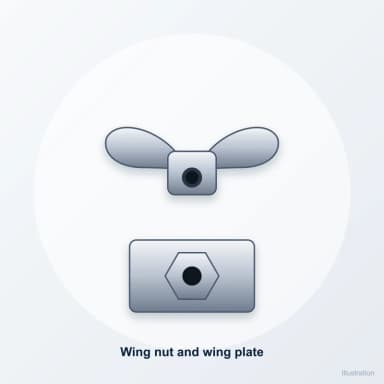
Wing Nut & Wing Plate
Parts: wing nut and wing plate (waller plate) | Fits: formwork tie rod, typical 15 or 17 mm | Material: steel or cast iron | Finish: black or galvanised (confirm) | Supply: loose, sold per piece or carton
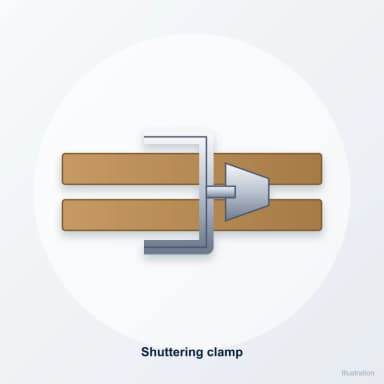
Shuttering Clamp
Material: steel | Type: formwork clamp for plywood and timber | Used on: slab edges, beam sides, columns | Supply: per piece or carton
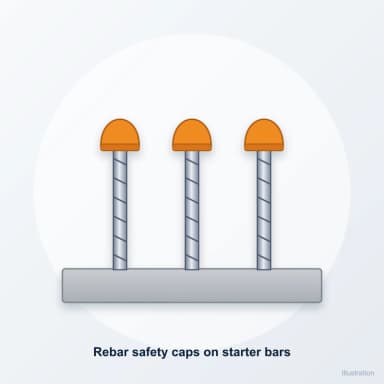
Rebar Cap (Safety Cap)
Material: plastic (PVC or similar) | Types: round, mushroom, square-top | Fits: common rebar diameters (about 8 to 32 mm) | Colour: often orange or red | Supply: per piece or bag
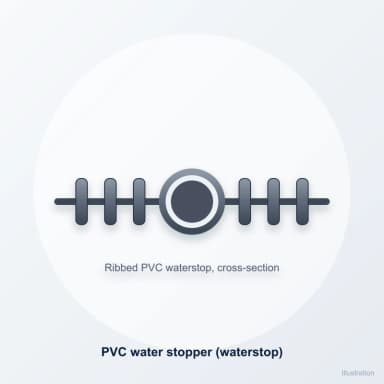
PVC Water Stopper (Waterstop)
Material: flexible PVC | Profiles: ribbed flat, centre bulb | Typical widths: 150, 200, 230, 250 mm | Typical roll length: 10 to 25 m | Use: concrete construction and movement joints | Supply: by roll or by metre
Ready to Order? Get a Free Quote Today
Contact our team for competitive pricing, custom orders, and fast UAE-wide delivery.